Estimate body fat at home without calipers
How to estimate body fat without calipers: the Navy tape method, impedance scales, and photo apps that track the trend, plus when a scan is worth it.
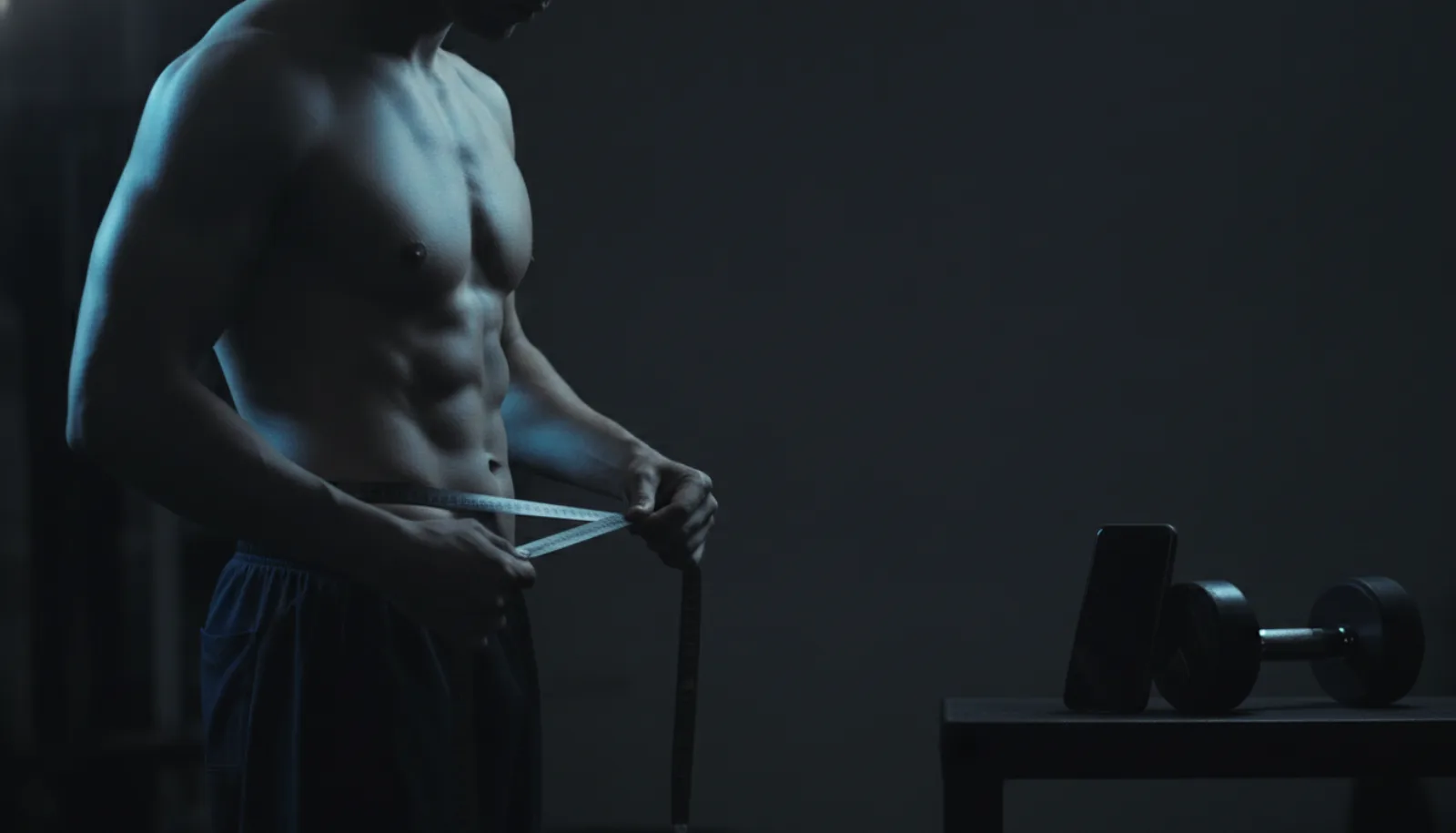
Two methods estimate body fat at home without calipers: a tape measure fed into the U.S. Navy circumference formula, and photo-based tracking apps that analyze progress photos to estimate body composition. A bioelectrical impedance scale works too, reading composition from tissue resistance to a weak electrical current. None of these replace a DEXA or InBody scan for a precise, lab-grade number, but for tracking a trend week to week, at home, for free, they’re the practical option. Below: the Navy method step by step, what impedance scales and photo apps actually do, the mistakes that throw either off, and when a real scan is worth booking instead.
Two ways to estimate body fat without calipers
The manual methods read a physical quantity: three circumferences for the Navy formula, or the tissue’s resistance to a weak current for an impedance scale. The photo method reads none of that directly; an app analyzes front and side photos for visual markers like muscle definition and fat distribution and turns them into an estimate. Which to start with depends on what’s on hand: a tape measure gets a Navy-method number today, while a phone and a habit of repeating the same photo every few weeks builds the trend line.
The U.S. Navy tape-measurement method, step by step
The Navy method turns three tape-measure readings into a body-fat percentage, and it needs nothing beyond a flexible tape measure.
Height. Stand straight without shoes and measure from the floor to the top of the head.
Neck. Wrap the tape just below the larynx, at the Adam’s apple, keeping it level and snug without compressing the skin.
Waist. Measure horizontally at the level of the navel, standing relaxed, without pulling the stomach in.
Those three numbers go into a Navy-method calculator or the standard formula, which converts height, neck and waist circumference into an estimated body-fat percentage. In centimetres, for men, it is:
Body fat % = 495 / (1.0324 − 0.19077 × log10(waist − neck) + 0.15456 × log10(height)) − 450
The equation comes from James Hodgdon and Mark Beckett at the Naval Health Research Center, who fitted it against underwater weighing of Navy men in 1984. The calculation itself takes seconds once the measurements are in hand; the measuring is the only part that takes practice, and it’s worth doing twice to confirm the tape landed in the same place both times.
Because it’s built from three circumferences and not an image of the tissue itself, the result is an estimate, not a scan: a starting point, not a verdict. That’s still useful: write the number down with the date next to it. One reading on its own says little, but the same measurement, taken the same way on a regular schedule, starts to show a real direction, which is the point of doing this at home at all instead of booking a single appointment somewhere.
Bioelectrical impedance scales: what they can and can’t tell you
A bioelectrical impedance scale sends a safe, weak electrical current through the lower body and measures how much the tissue resists it; fat resists the current more than muscle or water does, and the scale uses that resistance to calculate a composition estimate.
The catch is that the current’s path depends on how much water is in the tissue at the moment of the reading, and that changes hour to hour: after a workout, after a salty meal, first thing in the morning versus after coffee. None of those change actual body fat, but they can move the number the scale reports. That’s the same limit the Navy tape method and any single body-fat reading share: it’s an estimate, not a diagnostic-grade measurement, and it shouldn’t be read as one. The fix is procedural, not technical: weigh in at the same time of day, in the same state of hydration, and read the trend across several weeks instead of reacting to any single number on the display. Food tracking runs into the same problem without a kitchen scale in the picture: track calories without weighing food covers hand portions, household measures and repeat meals as the workaround.
Photo-based tracking: how the apps estimate body fat from pictures
Photo-based estimation analyzes front and side photos for visual markers like muscle definition, abdominal depth and fat distribution, instead of taking a physical measurement directly. Several of the apps below go further, comparing a new check-in against earlier ones to show a trend instead of one static reading; the value is in the comparison, not any one photo.
Several named apps do a version of this. GainFrame uses Google Gemini AI to analyze progress photos and estimate body composition metrics, including body fat percentage, FFMI, and a muscle map across twelve body areas, building a timeline across every photo scanned. MeThreeSixty is built around 3D body scans and side-by-side scan comparisons for body composition tracking, including body fat percentage. Search results for this exact question also surface Spren and ZOZOFIT among the named apps, plus an InBody-linked app for gyms that have the hardware. Our Best apps to track body fat with photos comparison lines those same four names up side by side, with the one accuracy claim worth reading skeptically. Worth knowing: the roundup that currently ranks first for this question is published by GainFrame itself, and it ranks its own app first, so read any single-app “best” list with that in mind.
GreekBody, an app for men who lift (not a training program), splits the two jobs in its Body tab. The number comes from the tape: waist, neck and height through the Navy formula above, shown as a range one point either side, two when the neck was not measured. The photos are for the eye: front and side check-ins on a framing guide, and Compare puts any two side by side with the weight and waist you stood at under each. It does not read body fat off a photo. It’s part of the free tier, alongside the rest of the app’s tabs. The output is a range and a direction, the same framing every method in this guide is built around, not a single precise number.
Mistakes that throw off an at-home estimate
Most bad readings trace back to inconsistency, not a bad method. A few habits quietly wreck either approach:
- Measuring at different times of day. A tape reading or an impedance scale taken first thing in the morning and again after dinner will disagree, not because body fat changed but because hydration and stomach contents did.
- Inconsistent photos. A different room, a different light source, a different distance from the camera or a different pose makes two check-in photos hard to compare, even when nothing about the body changed.
- Chasing a single number. One tape reading, one scale reading or one photo is a snapshot, not a trend, and a trend is what any of these methods is actually good for.
- Reading the output as more precise than it is. Every method here (tape, impedance, photo) produces an estimate, not a diagnostic-grade figure, and treating it as exact is where most frustration with these numbers comes from.
The fix for all four is the same: pick one method, keep the conditions the same each time, and judge it by the line it draws over weeks, not any single point on that line.
When to get a real scan instead
A DEXA scan or a clinical InBody machine reads body composition directly instead of estimating it from a tape or a photo. The InBody hardware behind one of the tracking apps above is the same kind of machine some gyms, including chains like Planet Fitness, already have on the floor. That’s worth booking when the question is a specific medical one, when a coach or doctor needs a real baseline, not a trend, or when a single precise number actually matters for a decision being made right now.
For everything else, watching a cut progress, deciding whether a bulk added more muscle than fat, checking in on a goal week to week, the point was never a lab-grade number. It’s a range and a direction, cheaply and repeatedly, which is what the tape, the impedance scale and the photo methods above are all built to give.
Start with whichever method matches what’s on hand: a tape measure and the Navy formula for a number today, or a habit of the same photo every few weeks for a trend. Either beats guessing, and both fail the same way if the conditions change between readings, so hold the time of day, the light and the pose steady, and judge the result as a range, not a verdict. Save the DEXA or InBody scan for when a precise baseline actually matters. GreekBody’s Body tab tracks weight, waist and a tape body-fat range the same way, with aligned photo check-ins beside them, free, alongside the rest of the app. Download it on the App Store.
Source: Hodgdon JA, Beckett MB, Prediction of percent body fat for U.S. Navy men from body circumferences and height, Naval Health Research Center Report 84-11, 1984 (doi.org/10.21236/ADA143890). The app cites the same report under Settings > Sources.
Frequently asked questions
Can you tell body fat percentage from a single photo?
Not reliably. A photo shows shape, and shape changes with light, pose and a pump. GreekBody's Body tab takes the number from the Navy tape instead, as a range, and keeps aligned front and side photos beside it so you can see what the number cannot show.
What's the most accurate free way to estimate body fat at home?
The U.S. Navy tape-measurement method is the usual first pick among free methods, since it needs only a tape measure and a formula, not any hardware. It's still an estimate, not a lab measurement, so tracking it consistently over time matters more than any single reading.
How often should I retake measurements or check-in photos?
Tape every week or two, photos every few weeks, both at the same time of day. That gap is long enough for a real change to clear the day-to-day noise covered above.