How much protein to lose fat and keep muscle
A practical protein target for men in a calorie deficit, why the number is per kilo of bodyweight, and how to hit it without weighing rice on a kitchen scale.
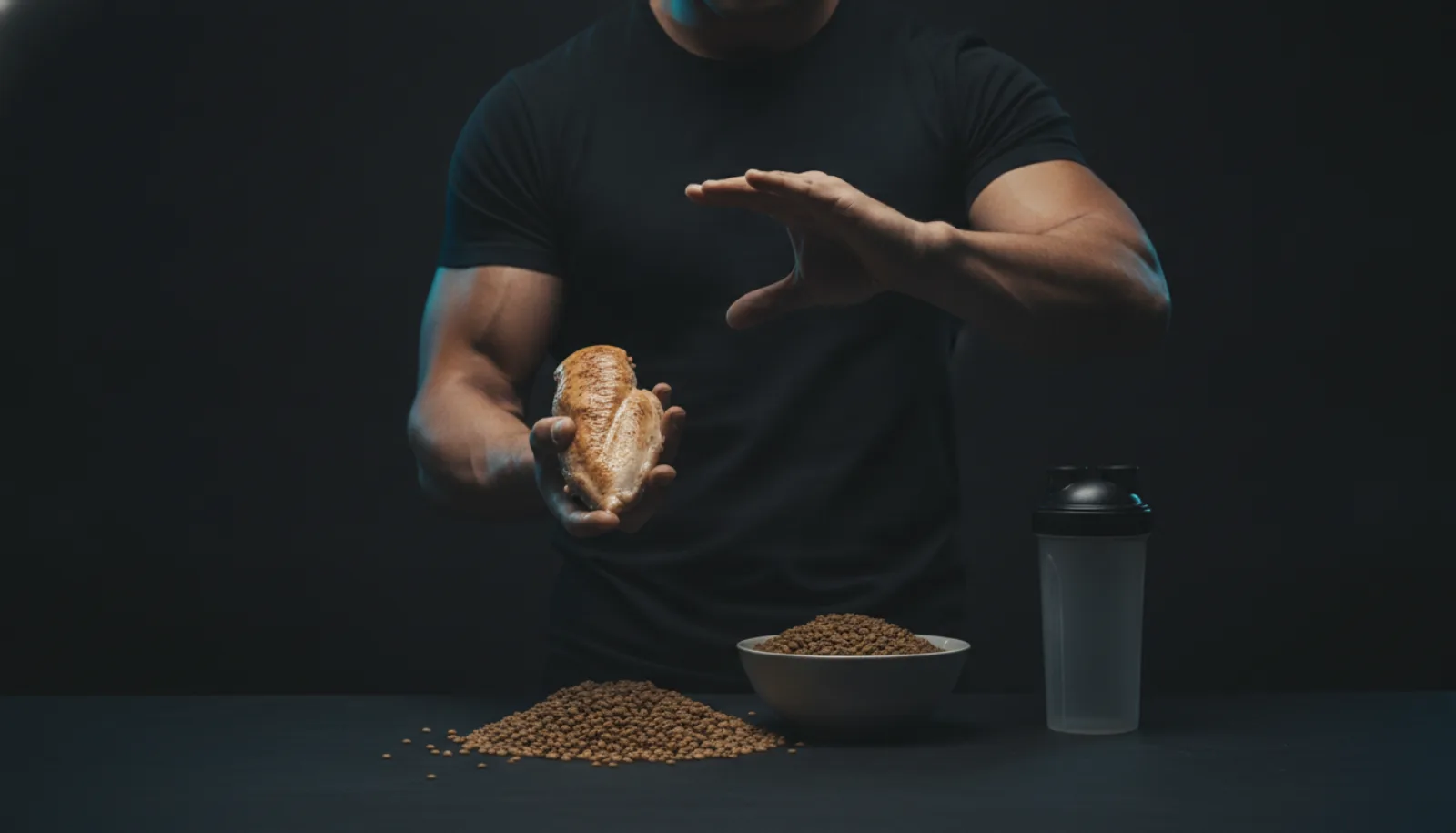
Losing fat means eating less than you burn. Keeping muscle while you do it is mostly two things: keep lifting heavy, and eat enough protein. The second is the one men get wrong, usually by a wide margin.
The number
1.3 grams of protein per kilogram of bodyweight per day. That is the target and the floor. Anything up to 1.6 g/kg is plenty. Past that, the calories do more as the carbs that run the next session.
For a 90 kg man (about 200 lb) that is 117 g a day, and up to 144 g is plenty. In pounds, 1.3 g/kg is about 0.6 g per pound of bodyweight and 1.6 is about 0.73. Count from what you weigh today, and recount as it comes down.
Two papers carry those numbers. The largest meta-analysis on protein and lifting, Morton and colleagues in 2018, pooled 49 trials and found that past about 1.6 g/kg a day, extra protein added no more lean mass. The ISSN position stand on protein and exercise calls 1.4 to 2.0 g/kg sufficient for most men who train, and says more may help a lean, trained man in a hard deficit. 1.3 sits just under the ISSN floor and well inside the range Morton measured. It is set there on purpose: a number you hit every day for months beats a bigger one you miss by dinner.
The rule you hear in every gym, one gram per pound, is 2.2 g/kg. That is the top of Morton’s range, rounded up and sold as the floor. Ask ChatGPT or Claude how much protein a man should eat to lose fat and keep muscle and you get a version of 1.6 to 2.2, cited to the ISSN, to Harvard Health on losing weight without losing muscle and to NASM. Not wrong. More than most men need. Where those answers stop is the part after the number: what goes on the plate tonight, and what else has to be true for the muscle to stay.
Why protein does the work
In a deficit the body is looking for tissue to break down. Training tells it to keep the muscle; protein gives it the material to repair what training damaged. Cut either one and the scale still moves, but a larger share of the loss is the tissue you were lifting to keep.
Protein also does more for fullness per calorie than carbohydrate or fat, which makes the deficit easier to hold for the eight or twelve weeks it needs.
What else keeps the muscle
Protein is one of the two things above and the training is the other. Load is what sends the signal; cardio mostly burns calories and does little of that job. The compound movements carry it best, which means squats, deadlifts, presses and rows, and the way to keep them heavy while you eat less is double progression: add reps inside the range first, add weight only once the top of the range is clean.
The size of the deficit sets how hard both of them have to work. A slower cut holds more muscle than a crash diet, so if the weight is dropping fast and the lifts are dropping with it, look at the deficit before you look at the protein. If the cut itself is wearing you down, refeed days on a cut are one option, and that guide covers when to skip them. The full deficit-and-training approach to lose belly fat and keep muscle after 30 walks through both sides together.
Deciding what to lift on a given day, and what to do when a lift stalls, is the part an app can own. Fitbod, Caliber and AI coach apps answer those two questions differently, which is worth knowing before you pay for one.
Hitting it without a spreadsheet
The practical version is coarser than the math:
- Anchor every meal with a protein source. Three meals with 40 to 50 g each gets most men most of the way there.
- Know your four or five staples by heart. A chicken breast, a tin of tuna, 200 g of Greek yoghurt, four eggs, a scoop of whey. Portions, not grams.
- Fix the gap in the evening. Count what you have had by mid-afternoon and close the difference at dinner.
- Do not chase the last 10 g. Precision below that is noise.
The scale is not the tool
Weighing every ingredient works until the day it does not, and then logging stops entirely. The goal is a number you hit most days for months, not a perfect number you hit for nine days. Photo calorie counting is the other route when weighing everything gets old.
What it looks like in GreekBody
The target is 1.3 g per kilo of what you weigh today, shown in grams per pound on US settings, and the multiplier is yours to change. Say the meal out loud and it is logged. The Fuel tab shows protein and calories against the day’s targets and what is left of both, so the evening question (how much steak fits) has an answer in grams from what is left. Ask Achilles to structure the rest of the day and he plans it from the record: the protein still missing, and any fibre or fat gap the day has opened.
Sources: Morton RW et al., Br J Sports Med 2018 (doi.org/10.1136/bjsports-2017-097608); Jäger R et al., ISSN position stand: protein and exercise, 2017 (doi.org/10.1186/s12970-017-0177-8). The app cites the same two under Settings > Sources, one tap from the target. GreekBody is one of the apps in the roundup of the best AI workout apps for men, and the question of whether an app or a human trainer is the thing worth paying for has a post of its own.
Eating targets are not medical advice. If you have a condition that affects what you should eat, talk to a doctor first.
Frequently asked questions
What should I eat tonight to hit my protein target with the calories I have left?
Work backwards from what is left. Pick the leanest protein you like, which is where chicken breast, turkey, white fish, tofu, lentils, chickpeas and beans earn their place, make the portion a palm or two, and fill the rest of the plate with vegetables so the meal is big without costing much. Ask a chatbot the same question and it will hand you a list of dinners, but it cannot see how much of today you have already spent; that number has to come from your own log.
How do I track protein without weighing my food?
Use your hand as the measure. A palm is the protein portion, a fist is the vegetables, a thumb is the fat, and your hand scales to your body and travels with you, which is why the method survives a restaurant. Learn your four or five staples in palms and you land inside the 10 g that stops mattering, which beats a kitchen scale you abandon in week three.
Does it matter how I spread protein across the day?
Spread it evenly and put a real dose in every meal, which is why the plan anchors each meal with a protein source instead of leaving 100 g to be cleared at dinner. Three meals at 40 to 50 g is the practical shape of the same daily number. If one meal comes up short, the fix is the next meal.
Do I count from my current bodyweight or a goal weight?
From what you weigh today, and recount as the weight comes down. Counting from a goal weight was the workaround for targets of 2 g/kg and up, which ask a heavy man for more than he can eat. At 1.3 g/kg of today's weight the number stays eatable at any size. A man carrying a lot of fat who wants a leaner number sets his own multiplier.
Is one gram of protein per pound of bodyweight right?
It is more than most men need. One gram per pound is 2.2 g/kg, which is the top of the range in Morton's 2018 meta-analysis, rounded and sold as the floor. The same analysis found gains in lean mass stopped improving past about 1.6 g/kg. 1.3 g/kg, about 0.6 g per pound, is a target you hit every day; 1.6, about 0.73 g per pound, is plenty.