What to Substitute When a Lift Causes Joint Pain
When a squat, bench, deadlift or overhead press causes joint pain: what to substitute, how it differs from going lighter, and when to see a pro.
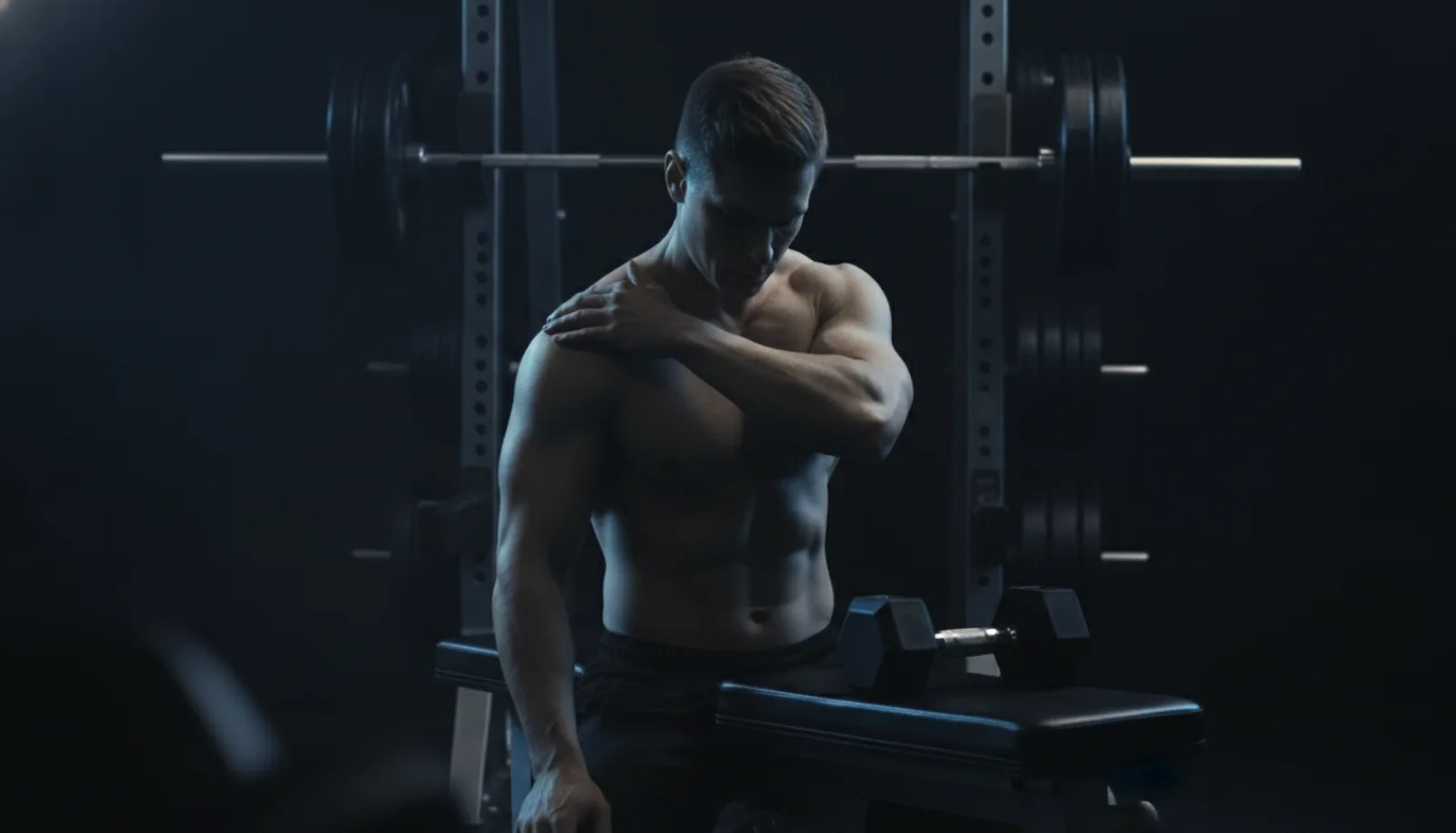
Swap in a joint-friendly variation that works the same muscle group without loading the sore joint: a leg press or goblet squat for a knee that hurts on the back squat, a floor press or landmine press for a shoulder that hurts on the bench, a trap bar deadlift or shorter Romanian deadlift for a back that hurts on the conventional pull, a landmine press or neutral-grip dumbbell press for a shoulder that hurts overhead. That is a different move from loading the bar with less weight on the same lift, and it is not always the right one: sharp or worsening pain is a signal to stop the lift outright, not a cue to swap and keep going. What follows covers both: which substitute fits which lift, and when to stop substituting and get the joint looked at.
Ordinary soreness, or a lift you should stop
General soreness the day after a hard session is ordinary training feedback: it fades within a day or two. Joint pain behaves differently. If a joint hurts more as the set goes on, or the pain is sharp instead of a dull ache, that is the signal to stop the lift immediately instead of pushing through it: stop for the day, instead of reaching for a substitute and continuing to train through it. A joint that is actively inflamed, not simply sore, shows it by staying hot, swollen or tender even after the set ends: hold a static position instead of loaded movement, such as a plank or a wall sit, until it settles. The substitutes below are for a different, milder case: a joint that hurts on one specific lift and is otherwise fine, where changing the movement lets you keep training around it. Ordinary soreness is a reason to warm up longer, not to change the exercise; for that case, see adjusting a session when sore.
Substitutes for the four lifts men flag most
A substitute exercise is not a random swap. The point is to keep training the same muscle group while changing the implement enough that the irritated joint stops taking the load: switching from a barbell to dumbbells, moving to cables, or dropping to a machine are three common ways to do that. The four lifts below cover most of what men flag inside a two-day A/B split or any other program.
Back squat hurts your knees
Three substitutes fit: a leg press with your feet set higher on the sled, a goblet squat with a lighter weight, or a wall sit, or isometric wall squat, to build quad strength without the deep joint flexion a full squat asks for, in line with general advice on exercising with joint pain. Start with whichever lets you finish a full set pain-free, then build back toward the squat.
Bench press hurts your shoulders
A floor press limits the range of motion at the bottom of the press, since the floor stops the descent before the shoulder gets there. A landmine press moves the bar on an angled arc instead of a straight vertical line. A cable chest press lets each arm find its own path instead of being locked to a fixed bar. All three allow a more natural, joint-friendly arm path; pick the one that lets you finish the set without pain.
Conventional deadlift hurts your back or hips
A trap bar deadlift centers the load around the body instead of in front of it. A Romanian deadlift with a shorter range, stopping above the floor instead of touching it, cuts the range where the pain shows up. A back extension trains the same hip-hinge pattern with a lighter, more controlled load. A forum thread on deadlift substitutes, started by a lifter working around spinal issues, lands on a similar list: single-leg work, hip thrusts and good mornings as further hip-hinge options.
Overhead press hurts your shoulders
A landmine overhead press angles the bar path instead of pressing straight up. A neutral-grip dumbbell press, palms facing each other instead of forward, is chosen to reduce impingement. Both keep the same pressing muscles under load. Try the neutral grip first if you already own dumbbells; it is the smaller change and the faster one to test mid-session.
Going lighter is not the same as substituting
Reducing the weight on a lift that hurts still moves the joint through the same path and angle, only under less load. If the joint hurts because of that angle, a lighter weight on the identical movement often still hurts, because the position has not changed. A real substitute changes the movement itself, not the number on the bar. Stopping a squat or a press a few inches short of where the pain shows up is one version of that, the same logic behind strength training with arthritis: the range of motion changes, and that, more than the number on the bar, removes the pain. A trap bar in place of a straight bar works the same way: the load stays similar while the joint’s path does not. Judge a substitute by whether the angle changed, not by whether the weight went down.
When to stop substituting and see a professional
Substituting works when a different movement lets you keep training the same muscle without the same pain. It stops being the right move under a few conditions: the pain shows up on the substitute too, not the original lift alone; the joint stays swollen or warm after training and not merely sore; the pain shows up doing ordinary things outside the gym, such as climbing stairs or gripping a doorknob; or the pain has not eased after changing the exercise. Any of those is a reason to see a doctor or a physical therapist instead of trying a third substitute. A professional can tell the difference between a joint that needs a different exercise and one that needs rest, imaging or treatment, which a substitution list cannot do.
How GreekBody handles a set that feels wrong
Everything above is a framework for a person choosing a substitute mid-session. GreekBody, an app for men who lift, applies the same idea inside its own workout program: it substitutes the movement in a slot when a set feels wrong. In practice that is the same logic as the leg press for a bad-knee squat or the trap bar for a bad-back deadlift above: a different movement in the same slot, not a lighter version of the one that hurt. It does not replace the judgment above. A joint that is sharply or increasingly painful, or stays swollen after training, still calls for stopping the lift and, if it continues, seeing a professional instead of trusting any app, including this one, to make that call.
The short version: match the substitute to the lift, not to the pain alone. A leg press or goblet squat for a bad-knee squat, a floor press or landmine press for a bad-shoulder bench, a trap bar or shorter Romanian deadlift for a bad-back pull, a landmine or neutral-grip press overhead. Judge each by whether the joint’s path changed, not by whether the weight went down. Treat sharp pain, a joint that stays swollen, or pain that follows you onto every substitute as the signal to stop guessing and see a professional instead. GreekBody applies the same substitution logic inside its own program. Download it on the App Store.
Frequently asked questions
Does a substitute exercise have to work the same muscle group as the original lift?
Yes. The point of a substitute is to keep training the same muscle group while changing the implement enough to take the load off the sore joint: swapping a barbell for dumbbells, cables or a machine. A swap that trains a different muscle group is not doing the job of the lift it replaced, even if it also avoids the pain.
What can I use instead of leg extensions or leg lifts if they bother my knees?
The same principle used for the back squat applies: shorten the range of motion so the joint does not reach the painful angle, or, if the joint is actively inflamed, switch to a static hold instead of moving it through a full range. A partial-range leg extension or a wall sit at a pain-free angle is a reasonable place to start.
What if the pain comes back even on the substitute exercise?
That is a signal to stop substituting instead of trying a fourth option. Pain that follows you onto a movement with a different joint angle, load and range of motion is less likely to be about the exercise and more likely to need a professional to look at the joint itself.